Saturday, December 19, 2015

Friday, December 11, 2015
Kindergarten Clay Pendants

Kindergarten students were very excited to work with clay. They wanted to take them home right away. It was hard for them to understand that clay needs time to dry. First Students flattened a piece of clay using a big rolling pin. Then, they used texture tools to add fun designs into the clay. They used the “printing gadgets” like various dried out marker caps, paint bottle lids, thread spools, etc. Old broken sea shells made interesting textures. They could not press too hard or they would cut through the flat pancake of clay. When the textures looked good, they picked out a cookie cutter to cut out a shape from the best part of their big pancake. Later, Ms. Yocca punched a hole in the top for the string. Then they went into the kiln, a big hot oven for clay. The gray wet clay became hard and white. Students colored very hard with special construction paper crayons. They colored until their fingers hurt. They made the crayon look great by painting with black paint. Ms. Yocca covered the pendants with a shiny paint.
 |
| These are the tools the students used to make their clay pendants. |
 |
| Students made gift bags by sponge printing over a stencil. They decorated with metallic markers. |
 |
| When I prepared the clay, I made slabs by cutting the clay with a wire clay cutter. I saved the slabs between sheets of plastic. Every student was given one-half of a slab to roll into a thinner pancake. |
Saturday, November 28, 2015
4th Grade Related Color Trees
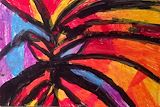
4th Grade students are learning about the 12 color Color Wheel throughout the year. For this lesson, they learned that related colors are colors that touch on the color wheel. Another name for related colors is analogous colors.
Students practiced drawing trees in their sketchbooks. Next they practiced painting trees with black paint. The idea was to practice making trees with wide trunks, thinner limbs and increasingly smaller branches as they grew upward.
For the final project, they drew a tree with branches that extended off the edges of the paper. They painted the trees black. Then they blended 2 related colors of oil crayon in each space that was created. The trees are abstract. Real trees in our neighborhood have many more branches and twigs. We simplified by leaving out details.
See more art work from this project here.
1st Grade Used Observation to Draw Leaves with Bamboo Pens
 
Students learned how to dip the bamboo pen into the India ink. They looked carefully at the outside edge of the leaves. No tracing. They added veins that they saw in the leaves.
|

3rd Grade Masks

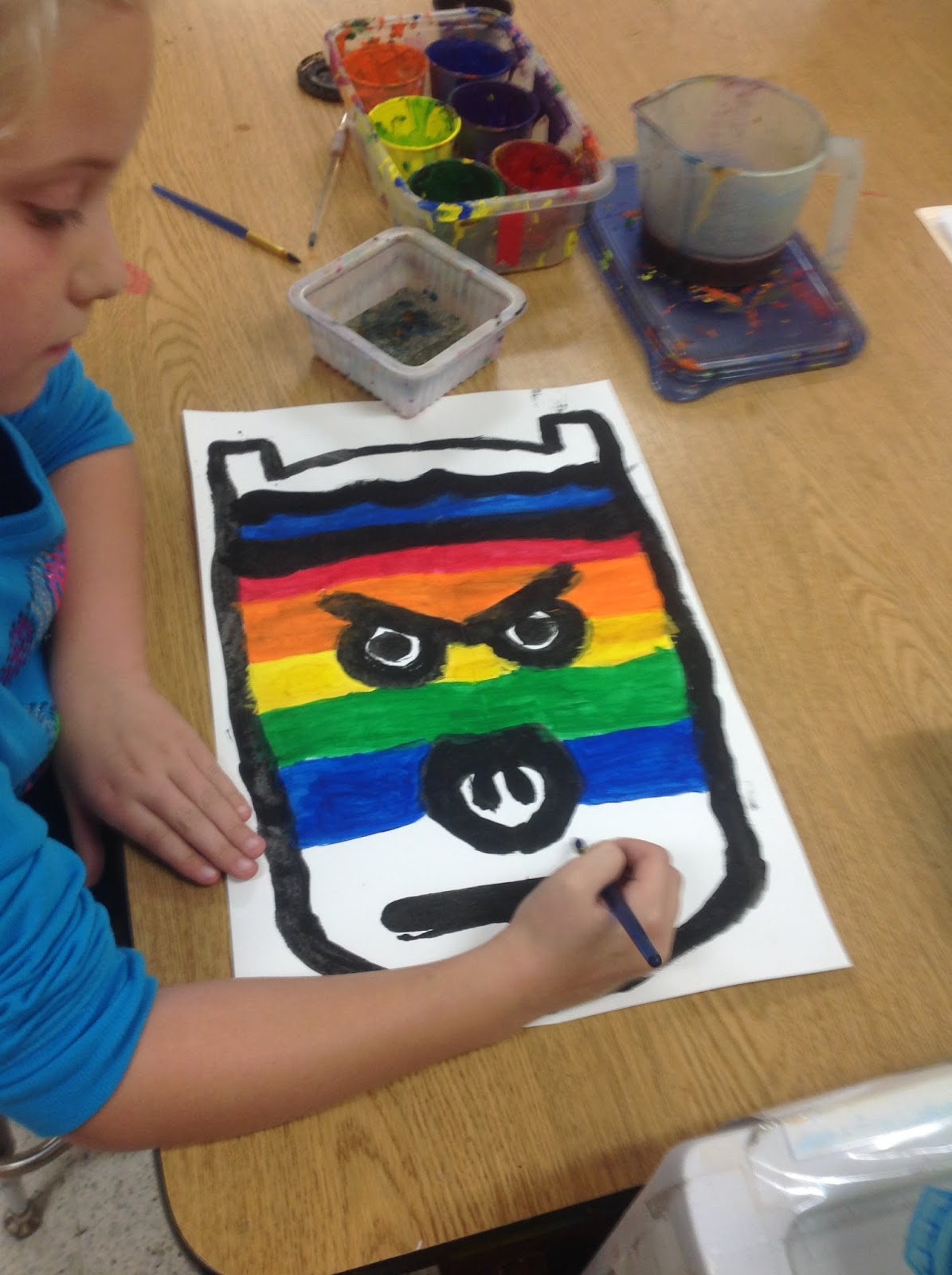
Third graders are working on their mask projects. We looked at masks from around the world. We discussed how the masks were made by people in oral cultures. These cultures used storytelling, ritual and ceremonies to convey their stories before they had a written language. We reviewed symmetrical balance before painting our mask shapes with black paint. The paint, fold and blot method keeps everything symmetrical.
 |
| Students draw in their sketchbooks if they finish a step early. |
 |
| Some students paint while others sketch in their sketchbooks. |
Sunday, November 15, 2015
Third Grade Works with Tints and Shades
Third Grade looked at the Blue Period paintings of Pablo Picasso. He used one color to paint these sad paintings. When an artist uses one color and many tints and shades of that color we call it a monochromatic painting. Third Grade learned that mixing white with a color made tints. Tints are lighter values of a color. When you add black you make a shade. Shades are a darker value of a color.

Students selected a shape and painted that shape with many tints of one color. Then they repeated the shape with many shades of that color.
They looked at the non-objective paintings of Sonia and Robert Delaunay.

When the students' shapes dried, they cut them into pieces and arranged them on a background paper. They chose the same color or a new color to paint the rest of the painting with tints and shades.

Students selected a shape and painted that shape with many tints of one color. Then they repeated the shape with many shades of that color.
 |
| Students who used orange or yellow used brown to make shades. Brown paint looks better with these colors than black. |
 |
| Some students made many shapes. |
 |
| Students adding tints and shades to their backgrounds. |
When the students' shapes dried, they cut them into pieces and arranged them on a background paper. They chose the same color or a new color to paint the rest of the painting with tints and shades.
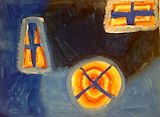
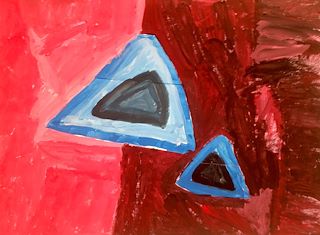
Student Paintings:

Subscribe to:
Posts (Atom)